
Those Who Live and Those Who Die
By Samantha Sollitto
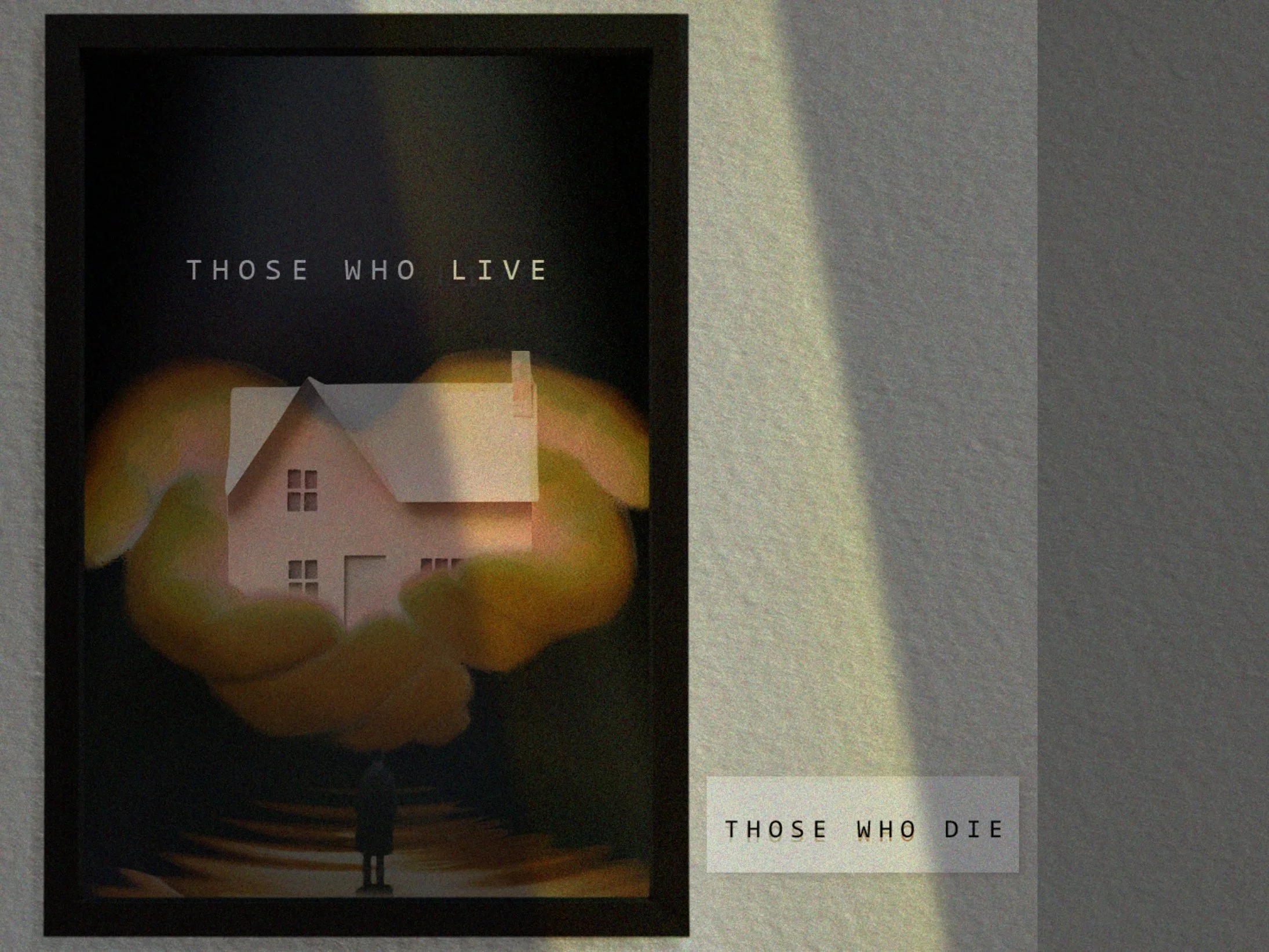
FEBRUARY 10, 2023—Joe had been scrolling aimlessly on his HP laptop in his office when he decided to look for apartment listings. The middle of February didn’t really allow him to do much since he didn’t enjoy the cold weather. His home office offered an escape from this feeling of being stuck in the house. It was like a world of its own where he could pretend to be getting important work done but actually be looking at photo albums on his computer.
He was in jeans and a “Best Grandpa Ever” t-shirt, his outfit ready for the day aside from his sneakers, which were downstairs by the door. Instead of looking for apartments in Staten Island, he decided to change course and look at New Jersey.
Everyone kept telling Joe that it was time for him to move out. His three-story house in Staten Island wasn’t cutting it anymore. He was seventy-one-years-old—his body didn’t move the way it used to. Along with his old age, he’s had countless surgeries on his hips and back that prevented him from going up and down stairs as easily as he once did.
His family and friends were urging him to move into a one-floor house, somewhere where he could easily access everything. He knew they were right, but he didn’t feel the need to actively look for a house. He had a home, one that he loved and grew his family up in. Leaving that behind in favor of his own needs just seemed selfish.
Nicky, his brother-in-lay, was always the first one to send him listings and show him new places. He would call Joe every time he found something, always excited for the possibility of this new journey with him. But every time, Joe let the moment pass, not really interested in whatever house Nicky was showing him that day.
After what seemed like hours of unsuccessful scrolling, he stumbled upon a one-story condominium in Sayreville, New Jersey, located in a fifty-five-plus community. It was semi-detached with bricks lining the front and a tiny patch of lawn. It felt like a suburban home without the overwhelming space that accompanied it.
The condo intrigued him. He liked the idea of being surrounded by people his age, and he knew the perks of living in a one-floor home. He wanted to be able to look out the front window and see the cars passing by. Then he’d look out the back window to the bird and squirrels that would loiter in his yard.
So he called Nicky up and said, “Do you want to take a ride with me?”
FEBRUARY 22, 2004—The wooden table was adorned with a plastic tablecloth and glass plates along with the usual utensils. Joe brought out the spaghetti and meatballs and placed them in the center before he warned everyone that the food might still be too hot to eat. He sat down at the head of the table with his children seated on either side of him. At the other end of the table sat his wife, Maria, but she was not in the same wooden chairs as the rest of them. She was in a hospice bed, sleeping.
Her bed faced the television and sat next to the couch. It allowed her to adjust the way she was seated, with the head moving up and down for comfort. During dinner, she was sat upward as if she were joining them for the meal, but her eyes remained closed as her oxygen machine moved up and down with every breath, its clunking noise acting as background music.
Everyone began filling their plates with spoonfuls of spaghetti and sauce, a meatball or two to accompany it. Maria wasn’t eating with them; she didn’t eat much anymore. Her diet consisted of pills upon pills to help alleviate the pain that breast cancer was causing her. She was ninety-five pounds, her blue pajamas hanging off her like a young child trying on their mother’s clothes, and her thick black glasses could no longer rest on the tip of her nose without falling off.
Before they began eating, Joe insisted they do a mealtime prayer. So they all brought their right hands up to their forehead, chest, left shoulder, and right shoulder in the sign of the cross as Joe led them through grace, thanking God for the meal on their table. When he finished the prayer, everyone did the sign of the cross once more and started eating, but Joe continued grace with a silent prayer for himself, his hands crossed on the table, his head lowered. He prayed for his wife. He wished God would take her pain away, give it to him if He had to. He would suffer a million times the pain she had if it meant she no longer had to bear the weight of it.
He concluded his prayer with the sign of the cross, briefly looking up at the ceiling, hopeful that there was some sort of understanding between God and himself.
He zoned out as he ate his meal, his family conversing and exchanging jokes. He remembered how he made Maria laugh on their first date, telling her the worst jokes, knowing that she would always laugh even if they were horrible. He tried to fight the tears brimming his eyes as he thought about how the worst thing about Maria getting sick was that he could no longer make her laugh. Her big, boisterous laugh that he loved echoed in his mind, a distant memory saved only for occasions of remembrance.
After they finished dinner and cleared off the table, Dom and Dawn said their goodbyes and headed home at seven p.m., calling it a night. Joe and Theresa finished washing the last of the dishes before she disappeared into her room. Joe wiped his hands on a dishtowel, hung it on the stove handle, and made his way back toward the dining room table.
He was seated opposite Maria again, but this time he was preoccupied by the crossword. It took him about an hour before he could even figure out one word on the puzzle, his attention only broken by the sound of the phone ringing. He walked over to the kitchen where the telephone was attached to the wall, picking it up and aimlessly staring at the counter in front of him.
“Hey, Joe. I just wanted to see how Maria’s doing,” his friend Frank asked.
Joe looked at her at the mention of her name, only then realizing the eerie silence of the house. Her oxygen machine no longer did its usual bobbing and clunking. Her chest was no longer rising and falling. Her eyes were still closed.
“I think she’s dead,” Joe said, hanging up the phone.
He walked over to her bed in the living room, his hand rubbing his chin as he stared intently at her body, hoping that he got it wrong, and that her chest would rise and fall like it’d been doing for the past fifty-one years. But there was nothing.
He wanted to scream. He wanted to cry, but he knew this day had been coming for a while. He knew this disease would take her before he was ready to let her go. He knew that it was only a matter of time before the pain became too much.
He called the hospice nurse to declare the death and arrange transport for her body. He waited until after he called to tell Theresa, who was still in her room, because he knew nothing would be able to control her sobs. He called Dom and Dawn shortly after, knowing that he’d deliver the worst news of his children’s lives.
They arrived about twenty minutes later. Everyone cried for their mother. They sat on the couch, waited by the door, hid in the bathroom, forming a chorus of sobs and voices who never wished to sing.
Joe cried silently next to Maria’s bed. He told himself he had to cry silently to stay strong for his kids, but he knew that these silent tears weren’t just for grieving his wife. He was grieving himself.
Maria was what kept the house together and kept Joe alive. She constantly lifted him up and reassured him when he felt uneasy about things. He remembered her telling him once that she should have made him pursue his dream of becoming a professional baseball player.
He looked over at her lifeless body and remembered his overwhelming fear of being hit with a curveball. He never would have been able to play professionally.
He got up from his spot on the couch and laid with Maria in her twin-sized hospice bed. He can’t remember the last time he slept in the same bed as her. He’d been waiting to feel comforted by her body, by the knowledge that someone was there with him at night, and that he wasn’t alone. But he didn’t want to hurt her any more than she had already been. The bed was too small for the both of them to fit.
Now any pain she had left was given to Joe to hold onto for the rest of his life.
He readjusted so they’re laying as if they’re getting ready to sleep for the night in their full-size bed upstairs. He turned on his side, facing her, his left hand unconsciously racing for the tips of her hair, the once wavy brunette now a short gray.
After about an hour, the funeral director came at nine p.m., offering his condolences as he and his team brought Maria outside and lifted her into the hearse. Joe followed them down the concrete pathway to the sidewalk, watching like a puppy as they placed her in the car. He watched them pull out of the driveway. He watched them drive down Amboy Road, his eyes trained on the hearse. He watched them as they faded out of sight.
He kept watching, waiting for her to come back.
For the longest time, Joe would stay awake in the living room, watching TV, only bringing himself to bed when his eyes could no longer stay open and his head drooped with exhaustion. Upstairs became haunted for him. He couldn’t go up there without thinking he was admitting defeat in the never-ending battle with himself.
On the day Maria was laid to rest, he sat on the couch in his pajama shorts and in an undershirt until Dom and his wife showed up, forcing himself to get ready. Joe walked up the stairs to the bathroom, where he stared at himself in the mirror. The bags under his eyes were a deep purple, his face unshaven and hair unkempt. He didn’t recognize himself, which was how he knew he couldn’t be in there. The house contained all the memories of things they used to do together that he now had to complete on his own.
Eventually, the living room became his bedroom. He would leave the TV on all day, the noise drowning the silence. Mail piled up and dirty laundry remained dirty. People would come and go. Theresa still lived there. Family members visited more often than not. There were people all around him and he was utterly alone.
Joe imagined this was what purgatory must be like. He lived in his own home, the one he’d raised a family in, yet he felt absolutely numb, just waiting to move on. The home they bought together eighteen years ago had become desolate and dry. The house was dead.
Joe had been making the twenty-minute drive to St. Andrew’s Church for a few weeks now. It’s been three years since Maria died, and he’s learned that, in order for him to live, he needs to be able to talk about his grief.
Every Monday at seven p.m., he makes his way to the parking lot across the street and into the recreation center where he helps set up folding chairs and a table in front of the stage where the parish’s students would put on plays.
They sat in a circle, each person going one at a time. They introduced themselves even though most of them had been coming for months now, letting everyone know why they were there. Joe knew the routine.
He had been thinking about joining a bereavement group for a few months before he acted on it. His friend Tommy, whose wife had died four months prior to Maria, said to Joe, “We belong to a club we never wanted to be a part of.”
The word “we” struck something inside of him. For months, he had been at home trying to pass the time, but his grief was too much for him to handle. The thought of other people who’ve experienced the same thing offered him some hope for guidance.
He sat and waited for his turn, listening as the others shared their stories—who they lost and how that affected them.
Joe loved telling stories. When Maria died, he started oversharing with doctors and nurses, retail workers and fast food employees. Without Maria to listen, he started telling them to anyone who could.
When it was Joe’s turn, he introduced himself and started from the beginning. He met a girl and fell in love with her immediately, telling his mother after their first date that he was going to marry her. They had three children and moved from Brooklyn to Staten Island. Later, she was diagnosed with breast cancer, and he lost her.
“We were supposed to grow old together,” he said, taking in his peers’ reactions, their faces filled with sadness and understanding. “I retired early to take care of her, but we were supposed to travel together. We were going to be ninety-five together, celebrating our seventy-fifth anniversary—”
“God laughs at our plans,” interrupted a woman who resembled Marty Allen with frizzy strands of black hair and a chubby face.
Joe was taken aback. Not by the intensity of her interruption but by the accuracy. He felt his skin grow cold, goosebumps parading his arms. He used to learn in Catholic school that God had a plan for all.
He realized that when you get older, you don’t become wiser. You become more naïve. You make your own plans and map out your own life, the thought of it being taken away or altered pushed to the back of your mind.
The plans you made are not plans. They’re mere suggestions for God to keep or reject.
FEBRUARY 10, 2023—When Joe and Nicky arrived at the fifty-five-plus community, someone had already placed a bid on the house Joe had been looking at.
He knew this was God’s way of telling him not to leave his home. He couldn’t leave Maria like that. She lived in that home. To move away would be to leave her behind.
He started telling Nicky that they should just leave and go get lunch somewhere—at least, then, it wouldn’t be a waste of a day. But Nicky was persistent. He pushed Joe to continue looking and pointed out all the similar condos available in the community. Joe decided to play along and looked at them to appease Nicky. He went into condo after condo, looking at brown floors, black floors, green walls, orange walls.
None of the homes screamed home to Joe until he got to a fully attached condo. It didn’t have the same brick design as the one he liked, but it had the lawn and tiny patio in the yard. The floors were a dark-brown wood with vomit-colored walls to contrast. The appliances in the kitchen were outdated, and there were beige carpets in the bedrooms. The bathroom seemed to have been recently renovated with a new sink and tiled walls, but it had a bathtub, which Joe would need to switch out for a shower.
Joe walked across the wooden floor to the sliding glass door. His hand lightly pressed on the cold glass, and he felt this warmth growing inside of him as if he were being covered by a wool blanket. He turned back around to take in the space one more time and knew that Maria was there with him, giving him permission to move on from the Staten Island house where they lived and died.
When Joe got home from looking at the condo, the weight was lighter than it had ever been. Maria was not in his memory, but with him, urging him to live in this new home. He knew he was closer to her now. He got ready for bed. He put on his pajama shorts and undershirt, washed his face, brushed his teeth, and then he lay down on his left side, his arm sprawled to the right, his fingers feeling for her hair.
SPRING 2026
Illustrations were done in collaboration with the New Media Artspace at Baruch College. The New Media Artspace is a teaching exhibition space in the Department of Fine and Performing Arts at Baruch College. Housed in the Newman Library, the New Media Artspace showcases curated experimental media and interdisciplinary artworks by international artists, students, alumni, and faculty. Special thanks to docent Olivia Pan for creating artwork for this piece.
Visit the New Media Artspace at http://www.newmediartspace.info/